Bud vase centerpieces keep showing up in every design meeting we sit through this year. Couples request them by name, and it’s easy to see why. After all, a single stem in a slender vessel sometimes says more than a full-size arrangement. And it does so with real restraint.
Hi! We’re Verdeaux & Co., a full-service wedding planning and design studio serving New Mexico. We design refined, intentional celebrations that feel connected to their setting. Because we oversee full tablescapes, we’ve learned exactly how bud vases earn their place among more traditional centerpieces.
In this post, we’re covering how to group bud vases so they feel curated, which vessels work best and how to layer them with candles and linens. Finally, we’ll walk through briefing your florist so the vision comes through clearly.
If you’re ready to start planning, we’d love to help. Learn more about our planning services, browse our portfolio, or contact us to get started!
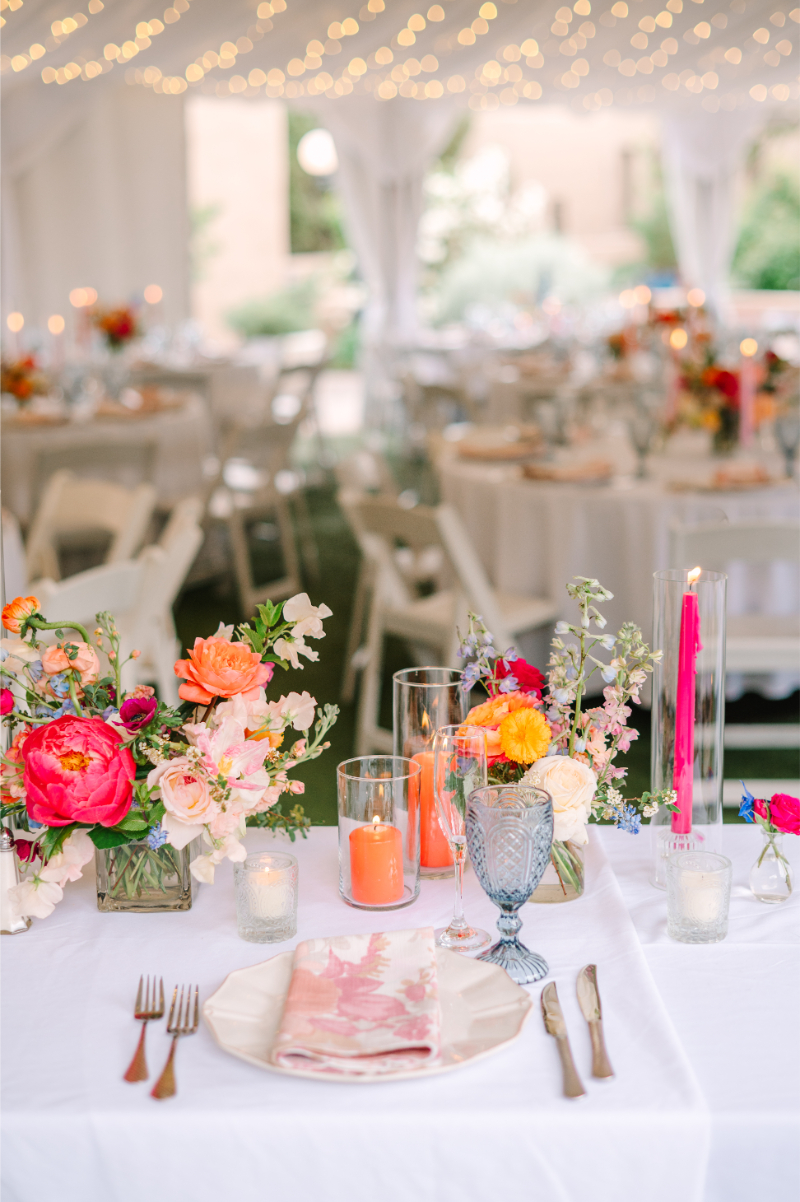
Photo Credit: Maura Jane Photography
More Table, Less Arrangement: The Case for Bud Vase Centerpieces at Your Wedding
For years, reception design leaned heavily toward one large, dramatic centerpiece per table. Bud vase centerpieces, however, offer a different kind of impact, and we understand why couples keep choosing them.
Instead of one dominant arrangement, dozens of small vessels, together, spread color and texture across the entire table. Guests can actually see each other, making it easier for conversations to flow.
There’s also a practical upside. Bud vases often use fewer stems overall. That can make them a smart choice for couples balancing a full floral budget. Even so, that efficiency never has to look like a shortcut.
Also, because they’re smaller, bud vases invite more personality into the design. Mixed vessel shapes, varied heights, and unexpected bloom pairings all read as considered.
For couples planning non-traditional celebrations, this format tends to feel especially at home. It resists the formality of a single, oversized centerpiece, in favor of something more relaxed and personal.
Once you’ve decided bud vases are the direction, the real design work starts with grouping.
If you’re planning a celebration outside the traditional mold, our guide to non-traditional nuptials in New Mexico can help.
Grouping Bud Vases So They Feel Curated, Not Collected
Scattering vases randomly across a table doesn’t really work like you think it would. The most successful bud vase centerpieces follow a few grouping principles that keep the look intentional.
1. Cluster in odd numbers.
Typically, groups of three, five, or seven read as more natural than even pairings. Odd numbers, in short, avoid the symmetry that can make a cluster feel stiff.
2. Vary the heights.
Likewise, mixing six-inch and fourteen-inch vessels creates visual movement. Otherwise, a row of identical heights can start to look repetitive.
3. Repeat, don’t randomize, your bloom choices.
Choosing three or four flower varieties and repeating them across vases keeps the table cohesive.
4. Leave breathing room.
Bud vase centerpieces work best with negative space around them. Overcrowding the table erases the very quality that makes this style appealing.
A loose, garden-style approach to grouping tends to photograph beautifully, especially with wildflower-inspired stems mixed throughout. That softness, naturally, pairs well with the format’s relaxed feel.
Once your groupings feel right, vessel choice becomes the next major decision.
For more on building that soft, gathered look, our post on wildflower centerpieces covers how loose textures come together.
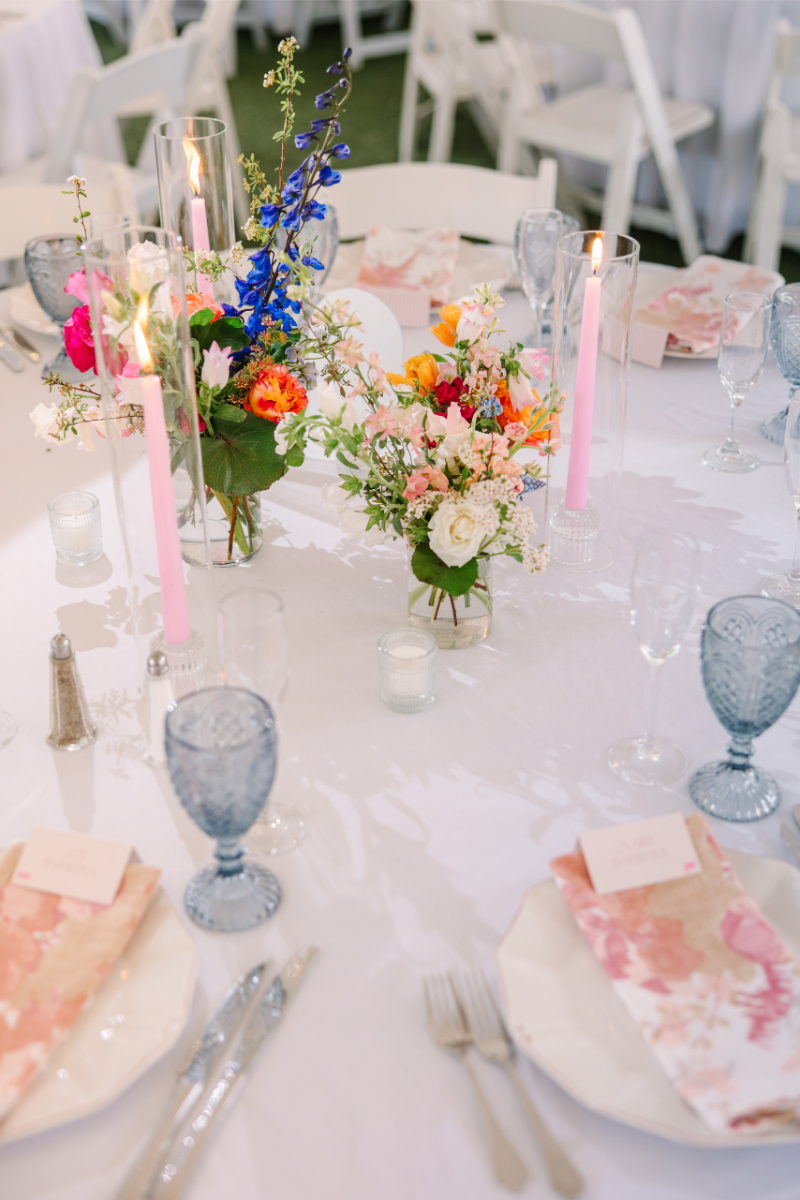
Photo Credit: Maura Jane Photography
Vessel Matters: Glass, Ceramic, Brass, and the Shapes That Change Everything
The vessel itself carries as much design weight as the stems inside it. Here’s how each of the most common materials tends to read on a reception table.
- Clear glass keeps the focus entirely on the blooms. It’s versatile, affordable, and works across nearly every wedding style.
- Ceramic brings warmth and texture, especially in earthy glazes like terracotta or matte cream. It suits desert and garden settings particularly well.
- Brass and vintage metal add a collected, worldly feel. These vessels, notably, photograph beautifully in candlelight.
- Colored glass introduces a subtle tint without overwhelming the palette. Amber and smoke tones work especially well for fall celebrations.
Mixing materials within a single grouping can look intentional when done with restraint. A cluster of clear glass with one or two brass accents adds interest without chaos.
Since most couples rent rather than purchase these vessels, sourcing becomes its own planning task. Knowing what’s available, and what it costs, helps avoid surprises later.
Our guide to wedding rentals walks through exactly what to look for and how to budget for vessels like these.
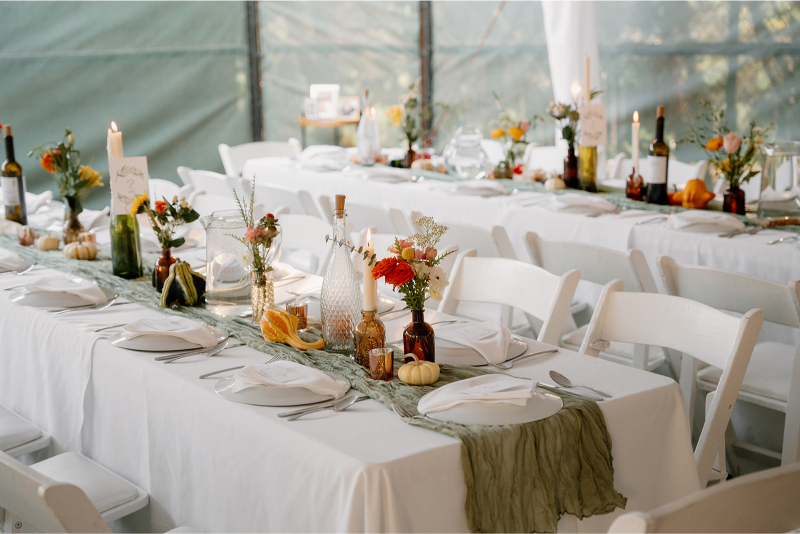
Photo Credit: Katherine Rose Co.
How to Layer Bud Vases With Candles, Linens, and Other Tablescape Elements
The most memorable bud vase centerpieces are layered thoughtfully with other design elements.
First, candles add warmth and movement that flowers alone can’t provide. Taper candles in varied heights echo the bud vases themselves, while votives fill remaining negative space.
Linens set the tone before a single vase is placed. Textured, natural-fiber runners pair beautifully with the relaxed feel bud vases naturally bring.
Menu cards and place settings deserve equal consideration. Ideally, their color and material should feel like part of the same visual story.
We generally recommend building the layering from the ground up. First, start with linens, then add candles, and place your bud vases last so their heights work around existing elements.
This same layering approach, in fact, shows up across seasonal tablescapes. It works whether you’re planning for cooler months or a bright spring celebration.
If you’re planning for a different season, our roundup of spring centerpiece ideas shows how the same layering principles adapt.
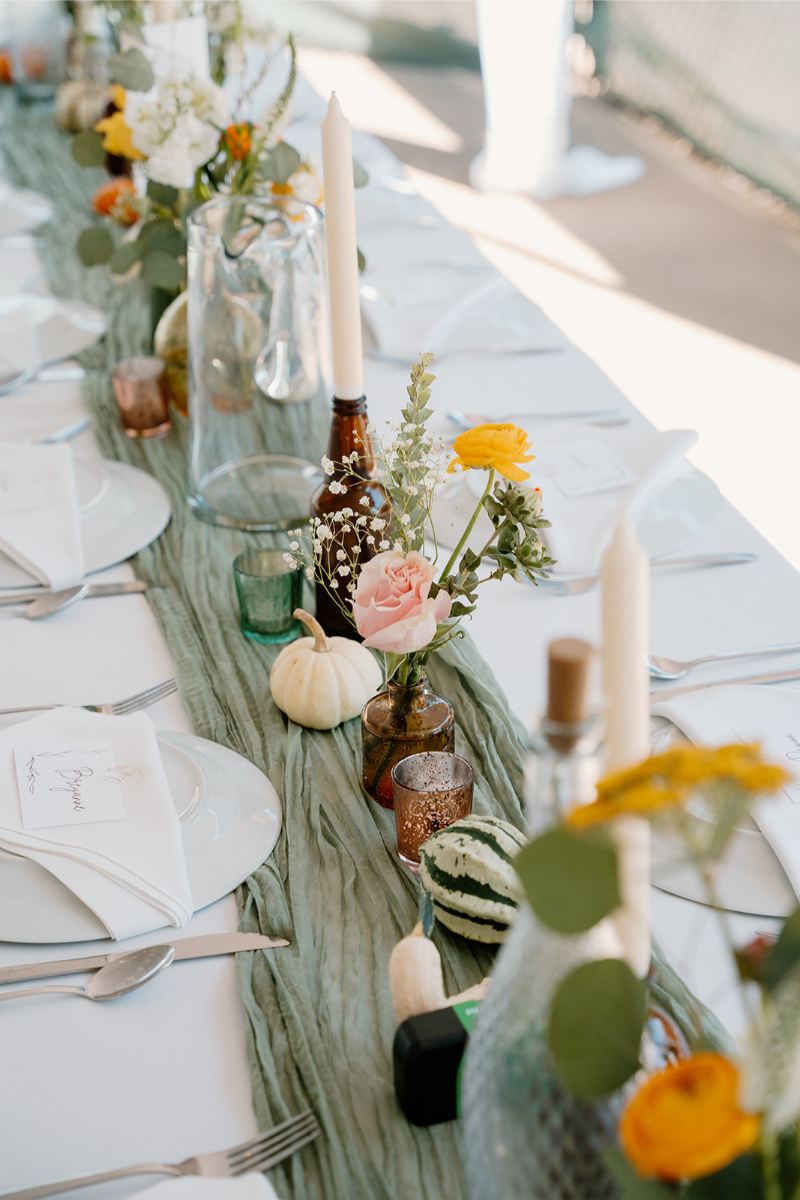
Photo Credit: Katherine Rose Co.
Making Bud Vase Centerpieces Work Across Different Table Formats and Lengths
Not every reception uses the same table configuration. Since format matters just as much as color or vessel choice, bud vase centerpieces need to flex accordingly.
- First, long farm tables benefit from a runner-style approach. Typically, clusters spaced every few feet create rhythm down the table’s length, without overwhelming it.
- Round tables, by contrast, work best with one central grouping. That grouping is often slightly denser than what you’d use on a long table.
- Family-style or banquet layouts can combine both approaches. In fact, they alternate dense clusters with sparser stretches to avoid visual monotony.
For couples who want more height, this doesn’t have to disappear entirely. Mixing in one or two taller stems per cluster is a popular middle ground. It brings drama, without losing the format’s signature lightness.
Whatever the layout, consistency in bloom choice and vessel style matters most. That consistency keeps the room feeling like one cohesive design.
For couples wanting more height, our guide to tall flower arrangements shows how to blend both approaches.
Briefing Your Florist on a Bud Vase Vision That Feels Considered
Even a strong concept can get lost without clear communication. A well-prepared brief, however, helps your florist execute a vision that matches precisely.
Before your first meeting, gather:
- Reference photos showing your preferred grouping density and vessel mix
- Your table count, shapes, and approximate lengths
- A rough budget range for both vessels and stems
- Any specific bloom varieties or colors you’re drawn to
Ask your florist directly how they source vessels, whether through their own inventory or a rental partner. Notably, this detail affects both cost and timeline.
A florist experienced with this format should offer suggestions of their own. Ideally, they should understand how grouping density changes with table size and lighting.
Ready to start those conversations? Our list of Albuquerque florists we love working with is a great place to begin.
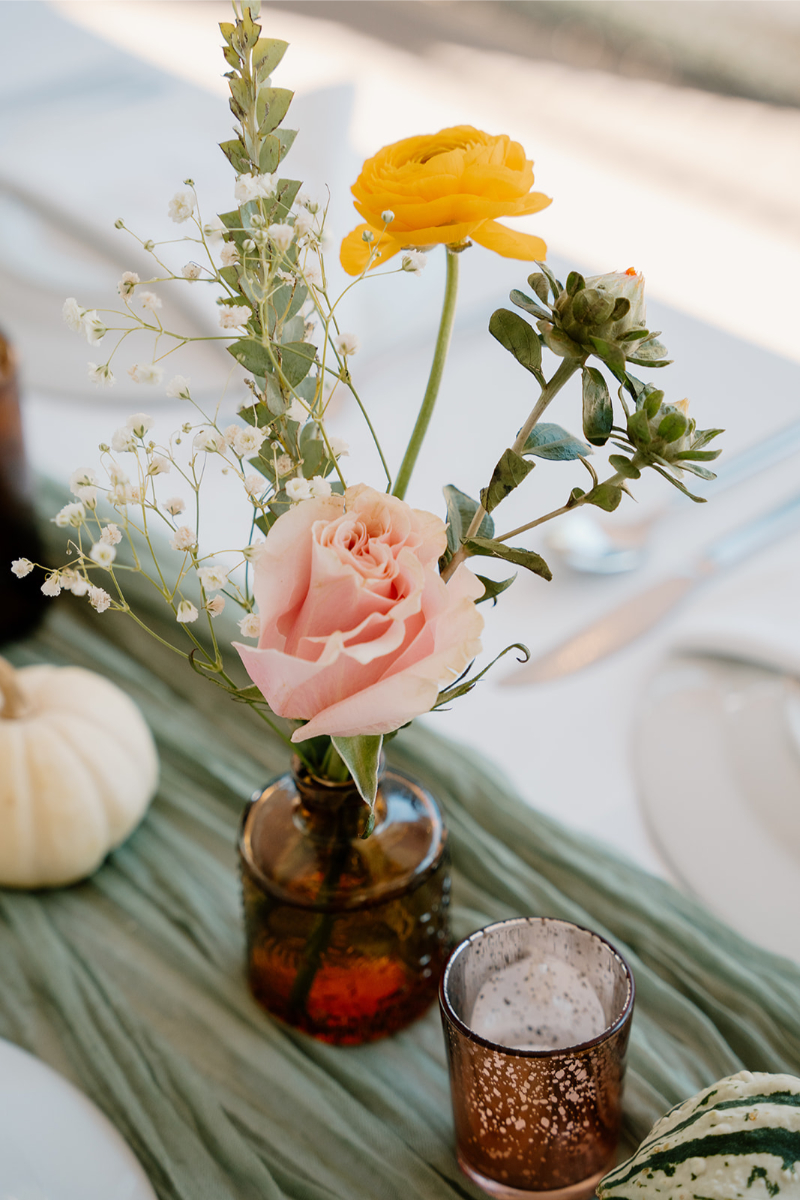
Photo Credit: Katherine Rose Co.
The Detail That Ties the Whole Table Together
Bud vase centerpieces keep earning their place in our design conversations because they solve a real problem. They add color and texture, without blocking a single conversation across the table.
The best designs never happen by accident. They come from thoughtful grouping, considered vessel choices, and layering that treats every element as part of one story.
If you’re drawn to this understated, detail-driven approach, we’d love to guide you. We can help bring this vision to life, from your very first conversation.
Learn more about our planning services, take a look at our portfolio, or contact us to get started!


