Wildflower centerpieces occupy a particular place in wedding design right now. For couples who want their tables to feel abundant and personal without appearing overdone, this design direction consistently delivers. Wildflower centerpieces feel alive and collected in ways other themes can’t capture.
Hi! We’re Verdeaux & Co., a full-service wedding planning and design studio serving New Mexico and Tennessee. We specialize in immersive, design-forward celebrations where every detail feels connected.
When we design tables around wildflower centerpieces, we approach them the same way we approach every design decision: with intention. The most successful wildflower tables aren’t random. They’re edited, considered, and built around a clear aesthetic direction.
In this post, we’re covering why wildflower centerpieces work, which vessels fit best, and how to brief your florist on your vision. And when you’re ready to start planning, learn more about our planning services, browse our portfolio, or contact us to get started!
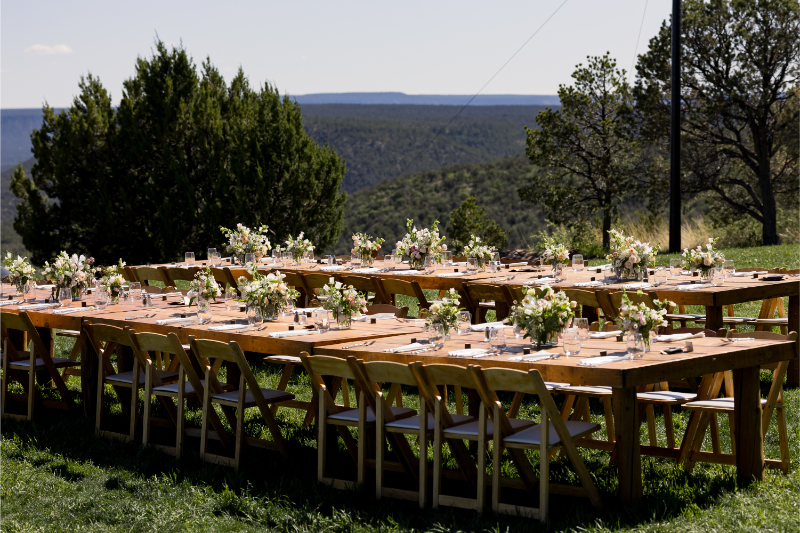
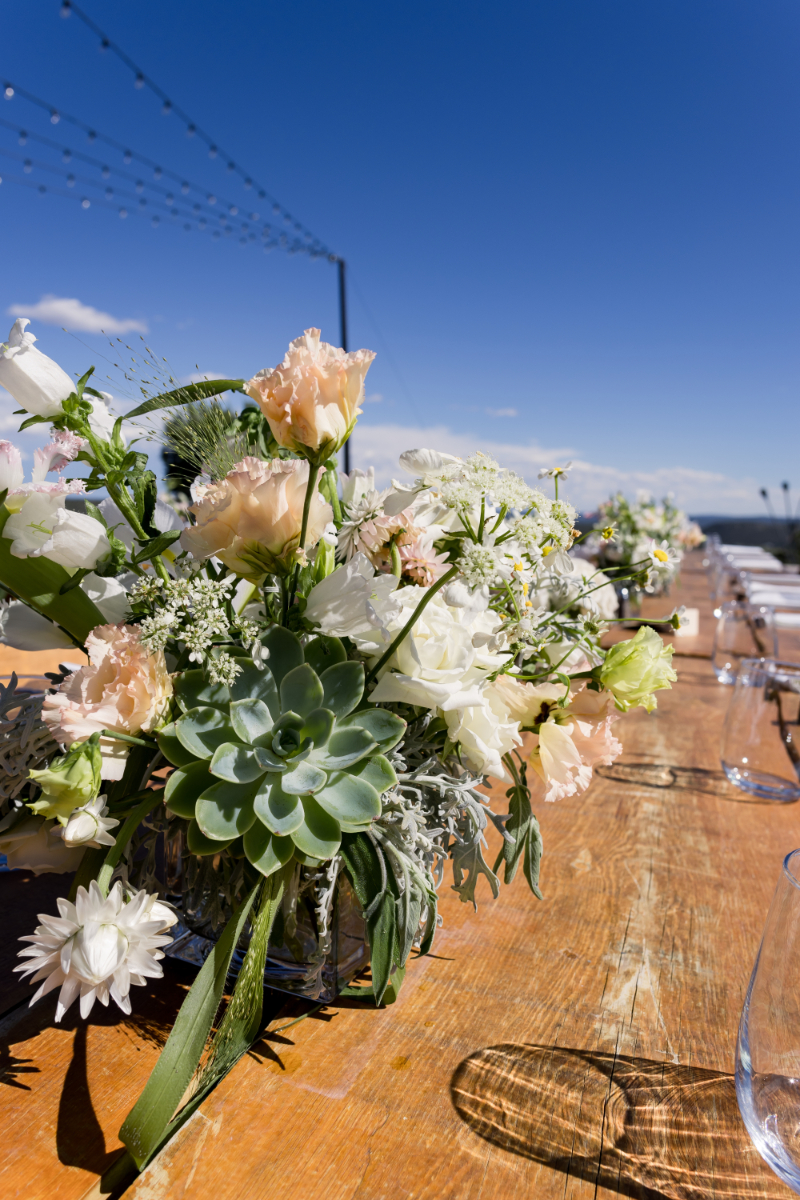
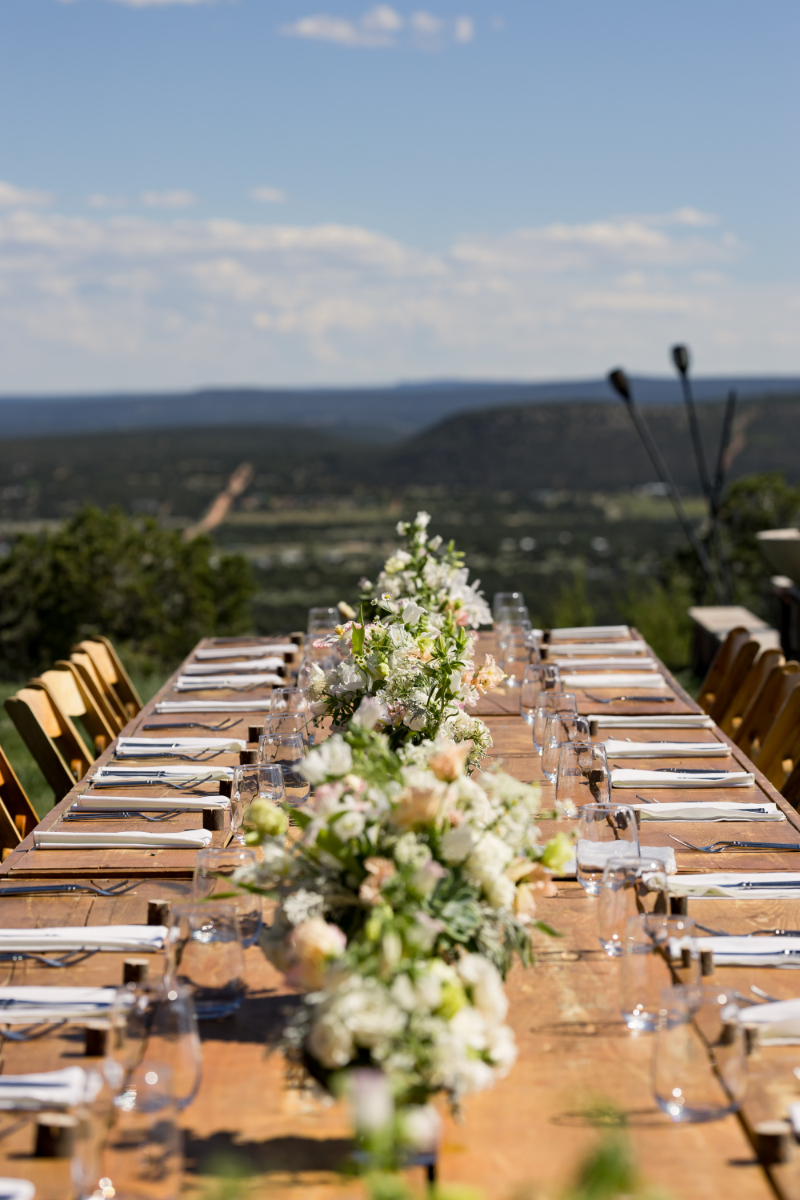
Photo Credit: Talitha Tarro Photography
Florist: Renegade Floral
The Appeal of Wildflowers: Why Unstructured Beauty Is Trending Right Now
Wildflowers carry a quality that formal arrangements often don’t: they look like they belong somewhere. Not in a showroom or a catalog, but in an untouched meadow or field. That sense of rootedness is what makes them so resonant on a wedding table.
Several shifts in wedding design have made this moment particularly right for wildflower centerpieces.
- First, the broader move away from symmetrical, constructed arrangements has opened the door for organic forms. Couples increasingly favor design that feels considered over design that feels controlled. Wildflowers sit naturally in that space.
- Second, seasonal and locally sourced florals have become both a design preference and an ethical one. Wildflowers, or cultivated blooms that evoke wildflowers, respond beautifully to what’s actually available. That responsiveness creates arrangements that feel connected to place and time.
- Third, and perhaps most importantly, wildflower centerpieces photograph differently from formal arrangements. They move with available light and the slight imperfections, a stem that leans, or a petal that curls, become compositional assets.
This isn’t chaos. It’s the appearance of ease that only comes from thoughtful restraint. A well-designed wildflower centerpiece knows which blooms to include, which textures to layer, and when to stop.
Looking for more floral ideas? Our post on bridal bouquet ideas shares how bouquet style sets the tone for the entire floral story.
Choosing Your Wildflower Mix: What’s in Season and What to Request
Wildflower centerpieces work best when they respond to what’s in season. Forcing out-of-season blooms defeats the authenticity that makes this direction compelling in the first place.
Below is a season-by-season guide to what works well in wildflower arrangements.
Spring
Spring brings the softest and most delicate wildflower palette.
- Sweet peas,
- ranunculus,
- anemones,
- hellebores, and
- scabiosa
All of these blooms carry the loose, layered quality that defines this aesthetic. Tulips at various stages of opening — from tight bud to fully relaxed — create movement without requiring additional variety.
Spring wildflower centerpieces often benefit from restraint. Because the blooms carry so much natural grace, fewer varieties tend to read more elegantly than many.
Summer
Summer opens up the color range and the scale.
- Cosmos
- Zinnias
- black-eyed Susans
- dahlias,
- garden roses
- larkspur
- chamomile
This is the season for mixed meadow arrangements with variety.
However, summer wildflower centerpieces can tip easily into busy. A strong color edit of two or three tones keeps the table reading as curated rather than chaotic.
Fall
Fall shifts toward warmth and texture.
- Dahlias in deep rust and wine
- toffee roses
- Amaranthus
- dried seed pods
- textured grasses
These florals together create arrangements that feel rich. The addition of dried elements extends the range and adds architectural structure to otherwise soft arrangements.
Winter
Winter wildflower centerpieces lean on structure.
- Anemones
- Ranunculus
- Hellebores
- clematis vines
All of these work well combined with evergreen and seasonal seed pods. The palette narrows, but the textural depth can be exceptional.
When requesting a wildflower mix from your florist, the most useful instruction is a palette, not a specific list of florals. Describe the tonal direction — warm, cool, muted, saturated — and the textures you’re drawn to. Then allow your florist to make selections and suggestions. A skilled florist who understands the wildflower aesthetic will source more effectively with that freedom.
For more detail on seasonal blooms and design direction, our post on spring centerpiece ideas is a great place to start.
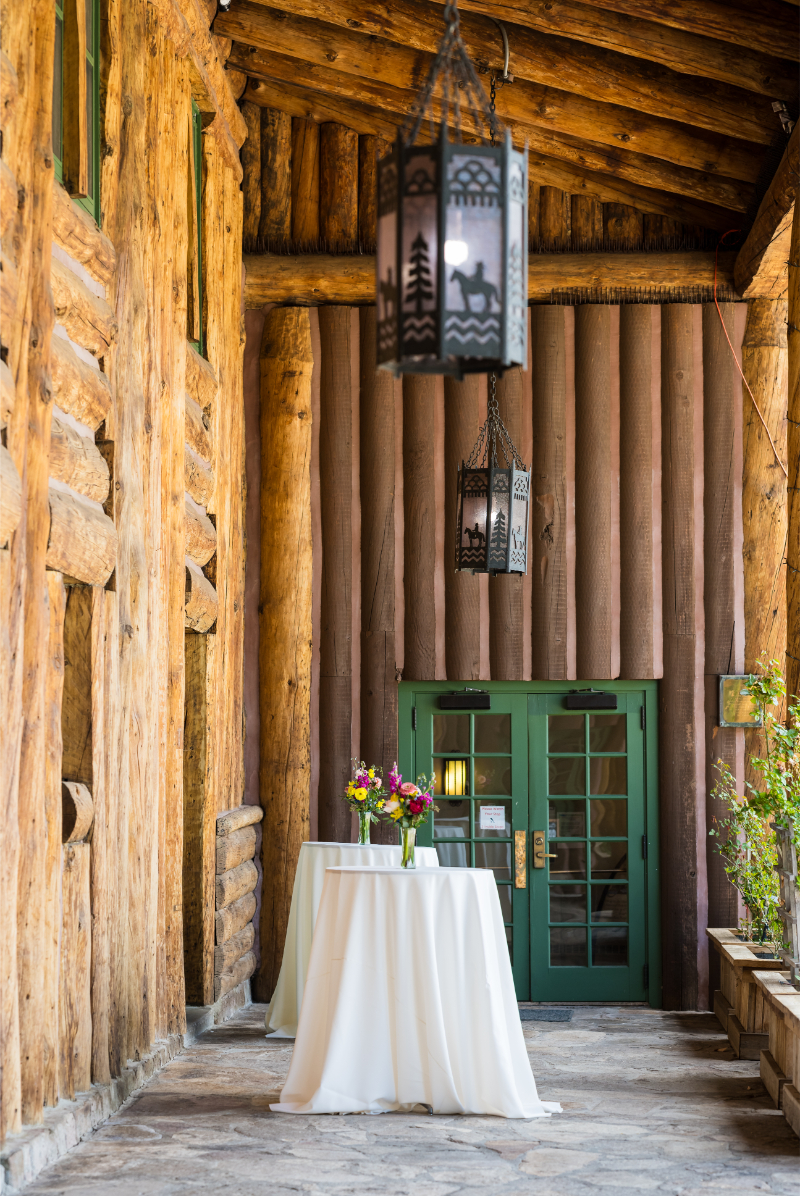
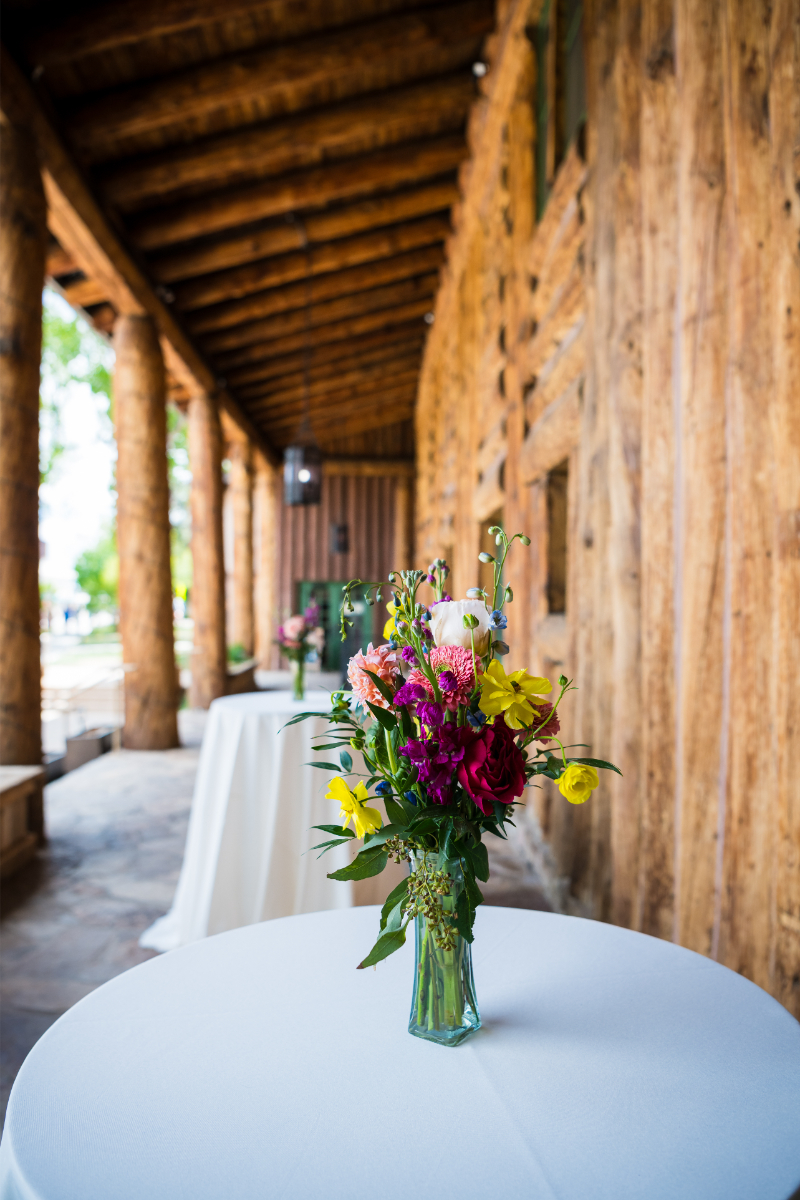
Photo Credit: Stephany Taylor Photography
Florist: Albuquerque Florist
The Vessel Matters: Compotes, Bud Vases, and Everything In Between
The vessel beneath a wildflower arrangement is not a neutral decision. It shapes how the arrangement reads, how high it sits, and how it interacts with everything else on the table.
Here are the vessel categories worth understanding before you brief your florist.
- Bud vases are the most versatile option for wildflower centerpieces. A cluster at varying heights — glass, ceramic, and terracotta mixed intentionally — creates a scattered meadow effect. This approach works especially well at long dining tables where centerpieces need to feel low and conversational. Each vase holds only a few stems, so bud vase arrangements are easier to update on the day without full re-installation.
- Compotes and footed vessels elevate the arrangement literally and visually. A compote lifts wildflowers off the table surface, allowing stems to spill downward and create a softer silhouette. This works particularly well at round tables where the arrangement needs to read from multiple angles.
- Low ceramic bowls bring the arrangement close to the table plane. This creates an intimate, gathered quality suited to arrangements that are wide rather than tall. Bowls work well with loose, abundant compositions where the stems themselves are as interesting as the blooms.
- Cylinder and straight vases of medium height sit between low and tall. They provide enough height for some stem visibility without creating a barrier between guests.
- Repurposed vessels such as vintage bottles, mercury glass containers, and antique ceramic jugs add narrative texture. When sourced carefully and used consistently, repurposed vessels can become a design statement in themselves. However, they require more curation than standard rentals. Each piece needs to feel intentional rather than assembled casually.
The rule of thumb: vessel material and finish should relate to your linen and tableware choices. A matte terracotta vessel sends a different signal from a polished glass compote, and both affect the overall table read.
If you are still working through your rental selections, our guide to wedding rentals addresses what’s worth splurging on and what you should skip entirely.
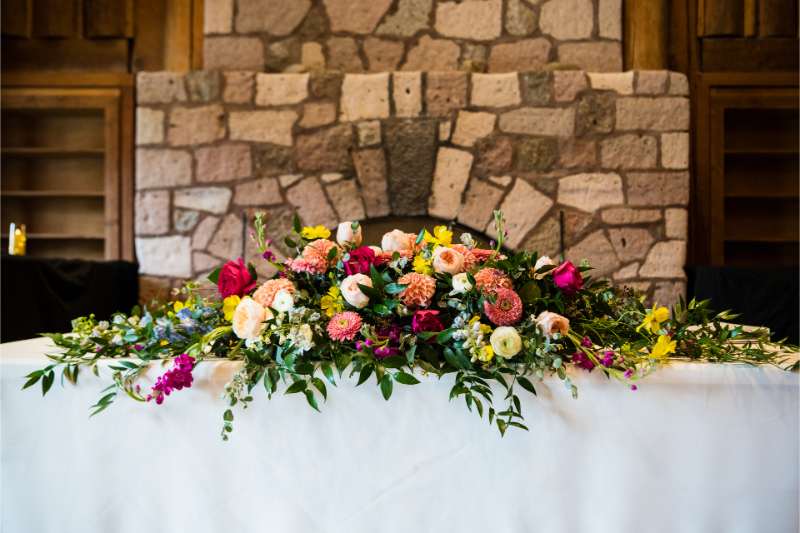
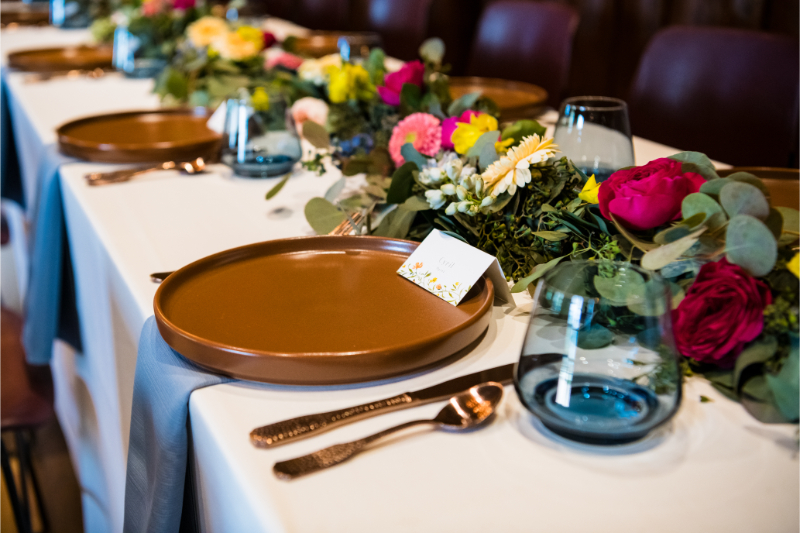
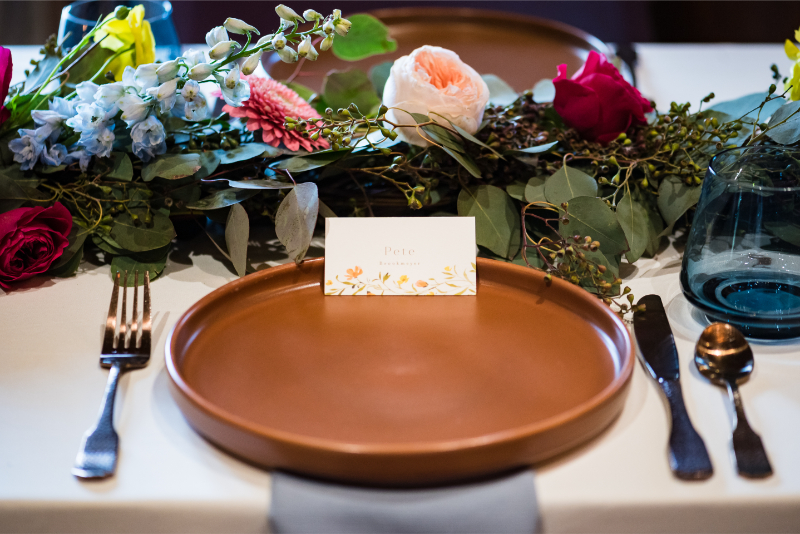
Photo Credit: Stephany Taylor Photography
Florist: Albuquerque Florist
Low and Lush vs. Gathered and Tall: Two Very Different Wildflower Directions
Before briefing your florist, decide whether your centerpieces should read low and lush or gathered and tall. These are completely different design directions that affect the entire atmosphere of the room.
Low and Lush
Low and lush arrangements sit at or near the table plane. They feel abundant and intimate. Guests can easily see each other across the table, which encourages conversation and creates a sense of enclosure.
This direction works best at long tables where the arrangement runs as a continuous low composition. It suits rustic barn venues, garden settings, and any space where ceiling height is low.
Remember, low and lush wildflower centerpieces rely on density rather than height. The composition reads across its width, so vessel choice and stem placement both matter more than usual.
Gathered and Tall
Gathered and tall arrangements draw the eye upward. They create drama and visual presence from across the room. Tall wildflower centerpieces work particularly well in high-ceilinged spaces where a low arrangement would disappear.
They also allow for tall statement stems such as foxglove, delphinium, larkspur, and flowering branches, with lower meadow blooms around the base.
At round tables, tall gathered arrangements work well because guests on all sides read from the same distance. Long tables present a different challenge. Tall arrangements can feel like a barrier unless the stems are see-through enough to maintain sightlines.
The Hybrid Approach
Alternating low bud vase clusters with taller single-stem moments creates rhythm along a long table without sacrificing conversation. It solves the sightline problem and adds visual interest that a single format cannot achieve.
The decision between low and tall comes down to venue scale, table shape, and the atmosphere you want.
For more advice on centerpiece proportion and how it translates from bouquet to table, read our post on luxury flower bouquet ideas.
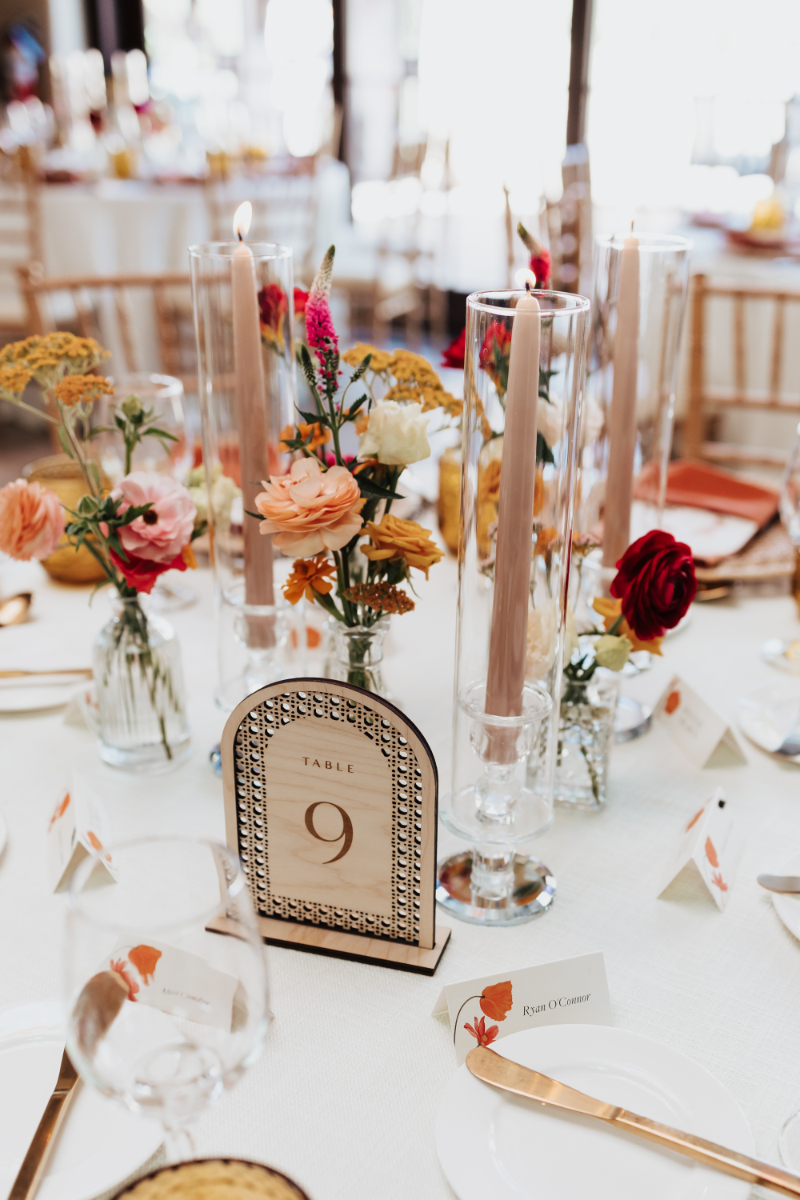
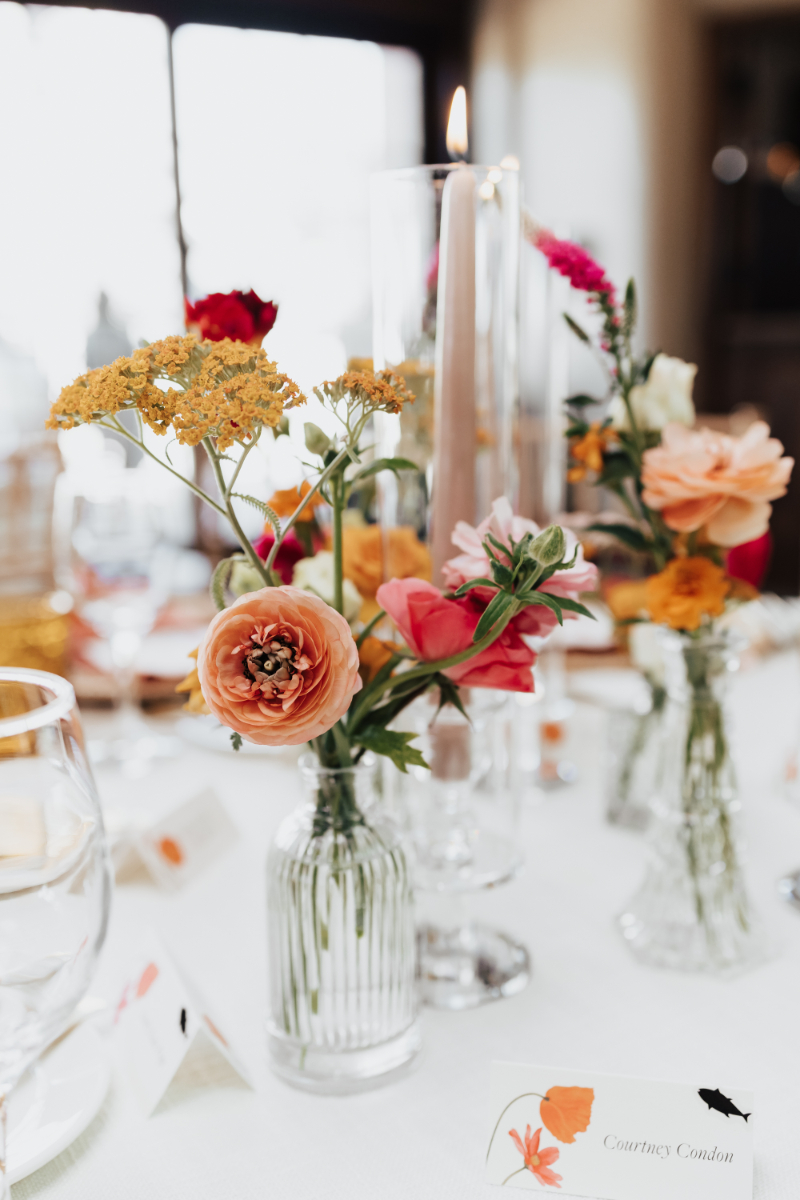
Photo Credit: Alicia Lucia Collective
Florist: Artichokes & Pomegranates
How Wildflower Centerpieces Interact With Your Linen, China, and Candlelight
Wildflower centerpieces don’t exist in isolation. They sit within a composed table that also includes linens, china, glassware, candlelight, and stationery. The way wildflowers interact with those elements determines whether the table feels cohesive or scattered.
Linens
Linens set the foundation. Wildflower centerpieces tend to read most naturally against textured, matte, or linen-finish tablecloths. Heavily textured linens, like a waffle weave or a slubbed linen, echo the organic quality of the blooms.
White and ivory linens keep the focus on the flowers. On the other hand, colored linens interact more actively with the arrangement. A dusty sage or warm terracotta linen amplifies the botanical quality of the wildflowers rather than receding behind them.
China
Wildflower arrangements pair most naturally with simple, unadorned plates where the rim doesn’t compete with the centerpiece. A plate with a botanical rim can complement the centerpiece if the pattern is restrained. Heavily patterned china can feel busy alongside an already textured centerpiece.
Glassware
Glassware height interacts with centerpiece height. At tables with low centerpieces, tall glassware can become the tallest element on the table. This isn’t necessarily a problem, but it’s worth considering in the context of the overall composition.
Candlelight
Candlelight is one of the most important wildflower companions. Taper candles placed within or beside the centerpiece create warmth and depth. As the evening progresses, candlelight softens the blooms and extends the life of the composition visually.
Low pillar candles nestled within a wide arrangement create a similar effect at a different scale.
The overall principle is every element on the table should be chosen with awareness of what it sits next to. Wildflowers are visually generous, but they work best when the rest of the table gives them room to breathe.
For more inspiration on how to approach using wildflowers across your design, check out our post on the garden wedding aesthetic.
What to Expect When You Brief Your Florist on a Wildflower Vision
Wildflower centerpieces are among the most misunderstood briefs a florist receives. Many couples assume that because wildflowers look effortless, the direction requires less guidance than a formal arrangement. In practice, the opposite is true.
A wildflower design brief that simply says ‘loose and natural’ leaves too much open.
Here is how to brief your florist with enough clarity to get the table you’re envisioning:
- Start with palette, not species. Describe the tonal direction: warm or cool, muted or saturated, one dominant color or a full meadow range. Wildflower arrangements are floristically flexible, but palette anchors the design.
- Bring images that show feeling rather than specific blooms. The best reference images show arrangements presented on a table rather than studio shots of single bouquets. That context helps your florist understand how the arrangement relates to the vessel, the linen, and the light.
- Clarify vessel preference early. Because vessel choice shapes the arrangement profile so significantly, it should be part of the initial brief. If you have a strong preference for terracotta over glass, say so.
- Describe the atmosphere, not just the look. Tell your florist how you want guests to feel when they sit down. Gathered and festive? Intimate and quiet? Lush and celebratory? That emotional direction guides selection more reliably than a list of specific florals.
- Ask about what’s available at the time of your event. A good wildflower florist thinks in season and in region. Give them the latitude to respond to what’s beautiful at the time of your wedding.
- Trust the edit. The discipline of wildflower design is knowing when to stop adding. Once you’ve communicated palette, vessel, scale, and atmosphere, trust your florist to make the selections that bring those parameters to life. A well-briefed florist doesn’t need more direction. They need trust.
For those planning in New Mexico, this guide to our favorite florists in Santa Fe highlights those who understand the wildflower aesthetic and the regional landscape it responds to.
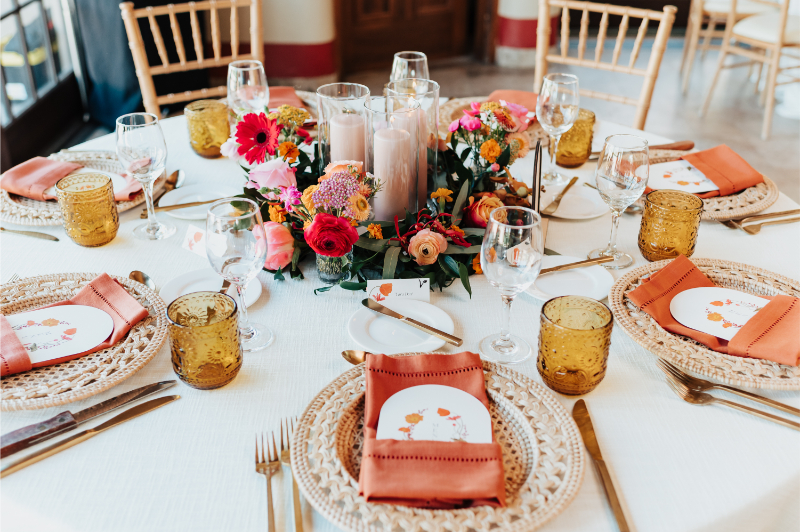
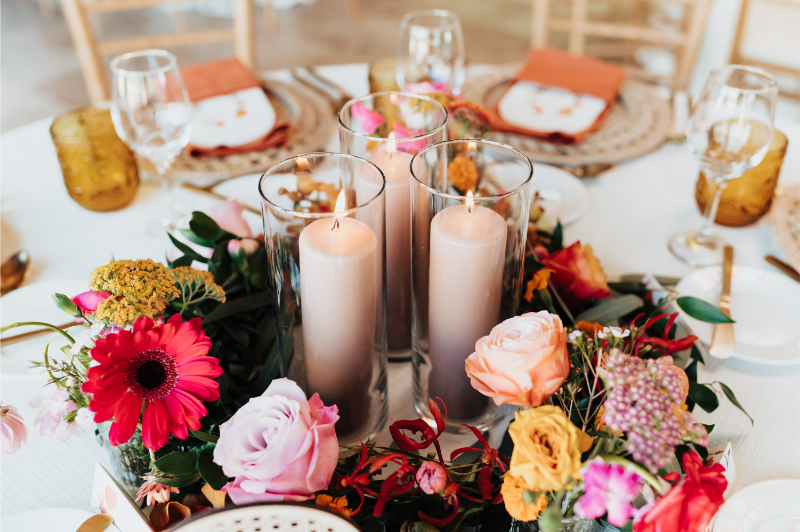
Photo Credit: Alicia Lucia Collective
Florist: Artichokes & Pomegranates
Wildflower Centerpieces That Feel Intentional
Wildflower centerpieces succeed when you trust your florist and give them a direction to work with. The aesthetic may look effortless, but the best wildflower tables are built from clear choices. Those choices: the right palette, the right vessel, the right scale, and a florist who understands how to edit.
When those elements align, the result is a table that feels alive, generous, and deeply connected to the celebration.
At Verdeaux & Co., we approach every design decision, including centerpieces, as part of a larger visual story. If you are envisioning a wedding where the flowers feel gathered rather than arranged, we would love to help you build that story.
Learn more about our planning services, take a look at our portfolio, or contact us to get started!


