Most couples spend months deciding on florals, venues, and menus. And the question “what time do weddings start” becomes an afterthought. But what time weddings start shapes everything that follows, including how the light falls during portraits, how guests feel by dinner, and whether the day has room to breathe. It’s one of the most logistical decisions you’ll make, and one of the most overlooked.
But before we get into it, hi! We’re Verdeaux & Co., a full-service wedding planning and design studio based in New Mexico. We guide couples through every layer of the planning process, including the timing decisions that don’t always make it onto inspiration boards. Start time influences design, vendor logistics, guest comfort, and the overall flow of the day. Because of that, we treat it as a foundational planning decision, not a logistical detail to sort out later.
In this post, we’re walking through everything that goes into choosing the right ceremony start time. From how season and light affect the decision to the venue rules couples often don’t discover until too late, this guide gives you the clarity to build a timeline that actually serves your vision. Ready to get started? Learn more about our planning services, browse our portfolio, or contact us to get started!
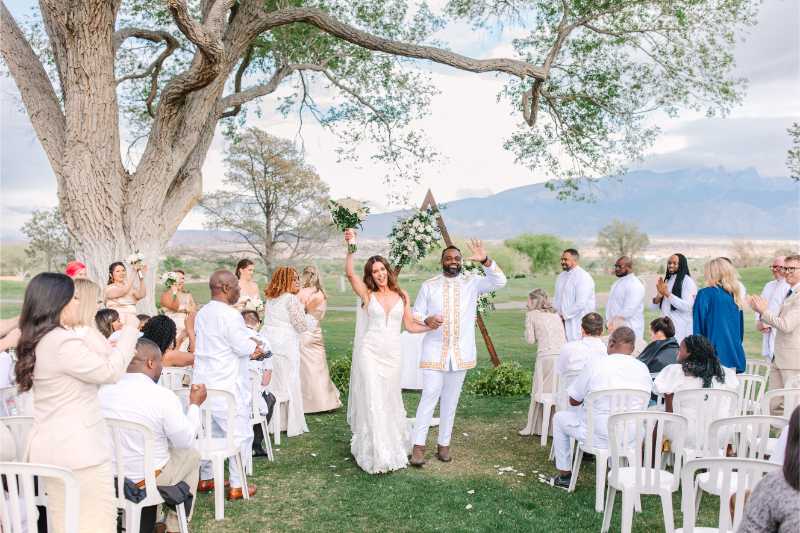
Photo Credit: Maura Jane Photography
Why Ceremony Start Time Matters More Than Couples Expect
The time you choose to start your ceremony creates a domino effect. Push it in one direction and everything downstream shifts — portraits run later, cocktail hour could be cut short, dinner starts after guests are already restless. The time printed on your invitation sets the pace for the entire day.
Here’s why it carries so much weight:
- Light is time-sensitive. Golden hour doesn’t wait. If portraits are scheduled after the ceremony, your start time determines whether you get that light or miss it entirely.
- Vendors operate on locked timelines. Caterers, musicians, and venue staff work within strict windows. A late start compresses every service that follows.
- Guest energy peaks and fades. Guests arrive excited. A ceremony that starts too early or runs too long before dinner can dampen the atmosphere before the reception even begins.
- Sunset is the anchor. In New Mexico especially, the evening sky is part of the design. Ceremony timing should work backward from when you want that moment to land.
- Travel and logistics need a buffer. Guests coming from out of town, venues with remote access, and multi-location days all need time built in before the first guest is seated.
Start time isn’t just about when the ceremony begins. It’s about how the entire day feels from arrival to farewell.
The single biggest factor that should drive your start time decision? The season you’re getting married in, and what the light does that time of year.
For a full breakdown of how timing decisions stack across the day, our guide to a seamless wedding day order of events walks through how each moment connects to the next.
What Time Do Weddings Start Based on Season and Light
Season changes everything about how you answer the question “what time do weddings start?” Sunset times shift by hours depending on the time of year. In New Mexico, where outdoor ceremonies are common and the light is spectacular, those shifts have real design consequences.
Spring
Sunset falls roughly between 7:30 and 8:00 PM. A 4:00 or 4:30 PM ceremony start leaves room for the full reception arc without rushing portraits. Spring temperatures in New Mexico are mild, which gives more flexibility in timing. However, Spring is also monsoon season with high winds and chance of rain. Be mindful of this when choosing a Spring wedding in New Mexico.
Summer
Summer sunsets push past 8:00 PM, but the afternoon heat can be intense. A 6:00 or 6:30 PM start avoids peak sun exposure during the ceremony while still capturing warm evening light for portraits. Guest comfort becomes a real factor in timing decisions.
Fall
Fall is the most desired season for New Mexico weddings, and for good reason. The light turns golden and warm earlier in the evening. Sunset arrives closer to 6:30 or 7:00 PM, so a 3:30 or 4:00 PM ceremony start works well. Keep in mind, temperatures cool quickly after dark, which is worth building into the timeline.
Winter
Winter sunsets arrive early, often by 5:30 PM. A midday or early afternoon ceremony start, around 1:00 to 2:00 PM, allows daylight portraits without rushing. Indoor venues and candlelit receptions suit this season naturally, reducing the pressure to chase outdoor light.
The seasonal rhythm of light should be the first thing you map before setting any other timeline decisions.
For more on how timing and design intersect by season, read our guide to planning a fall wedding in New Mexico and our post on winter weddings in Santa Fe.
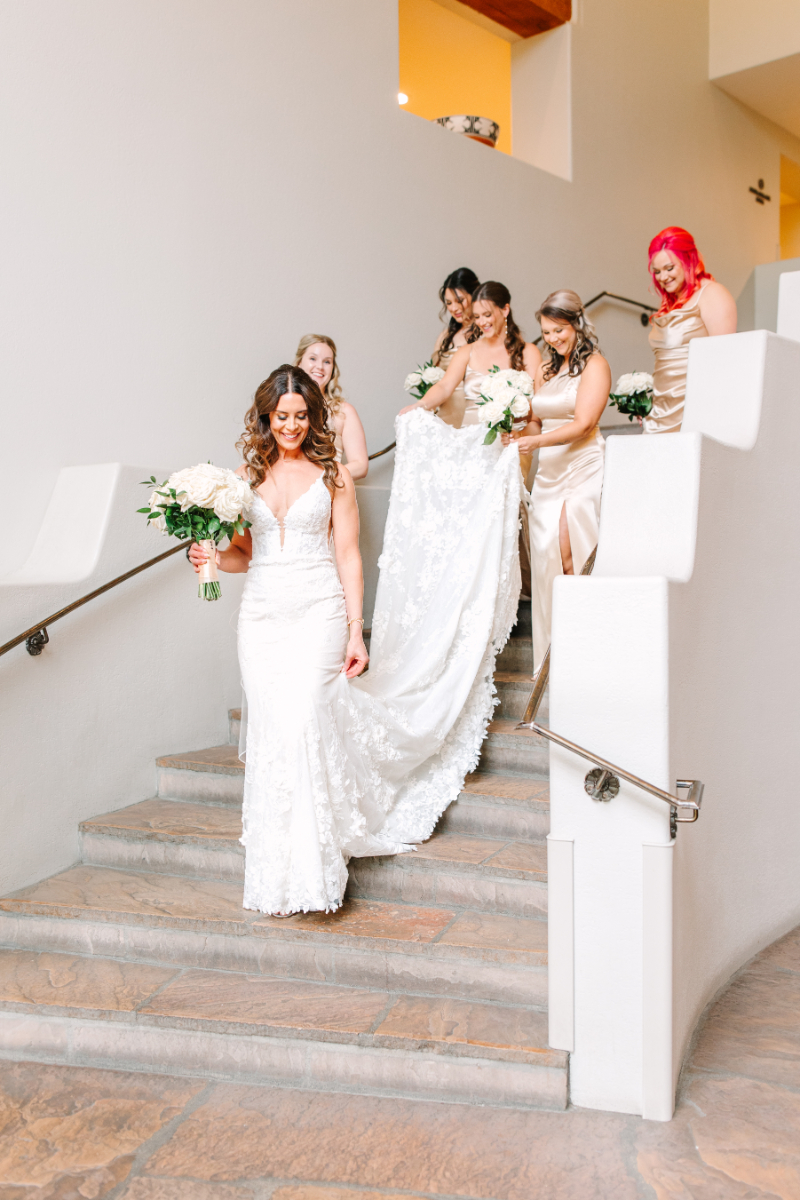
Photo Credit: Maura Jane Photography
Guest Experience Factors That Influence Start Time
Light and season frame the decision, but your guests are the ones living it. A start time that works beautifully on paper can still create a difficult experience if guest comfort isn’t part of the equation.
Travel distance and arrival windows
Out-of-town guests need time to check in, get ready, and navigate an unfamiliar area. A ceremony that starts before noon rarely gives traveling guests enough buffer. Generally, a 3:00 PM or later start is more forgiving for destination-style celebrations.
Heat and sun exposure
New Mexico summers are beautiful, but standing in direct sun during a 2:00 PM ceremony is uncomfortable. If your venue is fully exposed, afternoon starts come with a responsibility to plan around the heat. Shade, hydration, and timing all play a role.
Ceremony length and guest stamina
A 30-minute ceremony followed by a 45-minute cocktail hour lands very differently than a 75-minute ceremony with no break. Guests can sustain attention and energy, but only if the timeline is structured to support them.
Children and older guests
If your guest list includes young children or elderly relatives, an earlier start often means an earlier end, which is kinder to those guests. That said, a very early start can also mean a very long day for everyone.
Comfort-forward timing decisions make guests feel considered. That feeling carries through the entire reception.
Beyond guest experience, there’s another set of constraints that couples often don’t encounter until they’ve already fallen in love with a venue, and that’s the venue’s own rules.
If your ceremony is outdoors in warmer months, our guide on how to keep guests cool at an outdoor wedding covers practical planning strategies that work alongside your start time decision.
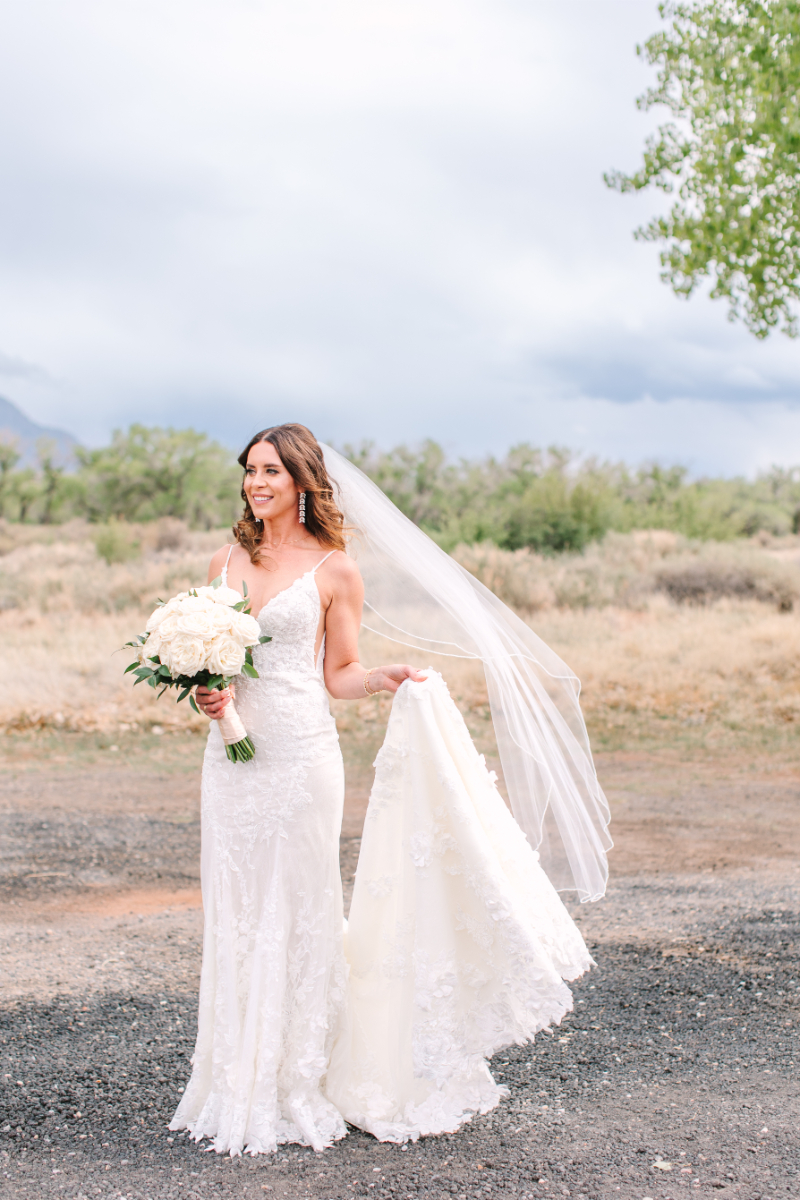
Photo Credit: Maura Jane Photography
How Venue Rules Impact What Time Weddings Start
Venue contracts contain more timing restrictions than most couples expect. Understanding them early keeps your timeline from being shaped by last-minute surprises.
- Access windows. Many venues define when vendors can begin setup. If setup requires six hours and your access starts at noon, a 10:00 AM ceremony simply isn’t possible.
- Hard end times. Music curfews, noise ordinances, and venue close times work backward from your end point. If music must stop at 10:00 PM and you want four hours of reception, your ceremony needs to start no later than 5:00 PM.
- Ceremony location availability. Some venues offer multiple ceremony spaces, each with their own booking windows. If the outdoor ceremony space is only available until 4:00 PM, that’s your ceiling for when the ceremony can begin.
- Turnaround time between events. Venues that host multiple events in a day may have mandated gaps between them. That gap affects how early your day can start.
- Permit restrictions. Historic properties and public or park-adjacent venues sometimes operate under permits that restrict hours. Those restrictions aren’t always easy to negotiate.
Reading the venue contract carefully, and before booking, prevents timeline conflicts that are hard to solve after signing.
Even when venue rules are well understood, couples still run into timing problems. This is usually because of patterns that are easy to miss until you’ve planned enough weddings to spot them.
For a full list of what to ask before you commit to a venue, our post on questions to ask your wedding venue covers the timing and logistics questions that matter most.
Common Timing Mistakes to Avoid
Most timeline problems don’t come from bad decisions. They come from assumptions. Here are the ones we see most often.
1. Underestimating portrait time
Couples routinely budget 20 to 30 minutes for portraits. In practice, family formals alone often take that long. Build at least 60 to 90 minutes for all portrait sessions combined, and protect that window from other timeline pressures.
2. Forgetting the buffer between ceremony and reception
Guests need time to transition. Cocktail hour isn’t just a hospitality touch, it’s the operational gap that allows the reception space to be prepared and portraits to happen. Shrinking it creates a chain reaction through the rest of the evening.
3. Starting too early for the season
A 2:00 PM ceremony in July means post-vow portraits in full summer sun at 3:00 PM. It also means guests sitting in heat during the ceremony. Seasonal light and temperature should set the floor for how early you’re willing to go.
4. Adding time without adjusting the end
If the ceremony runs long, couples often assume they’ll “catch up” later in the evening. But in reality, each delay compounds. The more reliable fix is building buffer into the timeline from the start, not having to cross your fingers and hope to reclaim it later.
5. Not accounting for travel between locations
If your ceremony and reception are at different venues, travel time must be built in explicitly. Ten minutes on a map can become twenty-five minutes with a wedding party in formal wear.
Every one of these mistakes is preventable with the right planning structure in place from the beginning.
Having someone in your corner who has navigated all of these variables before makes the difference between a timeline that holds and one that unravels.
For a deeper look at how to build a timeline that holds together under real-day pressure, our post on wedding planning timeline tips walks through how to pace the engagement season and the day itself.
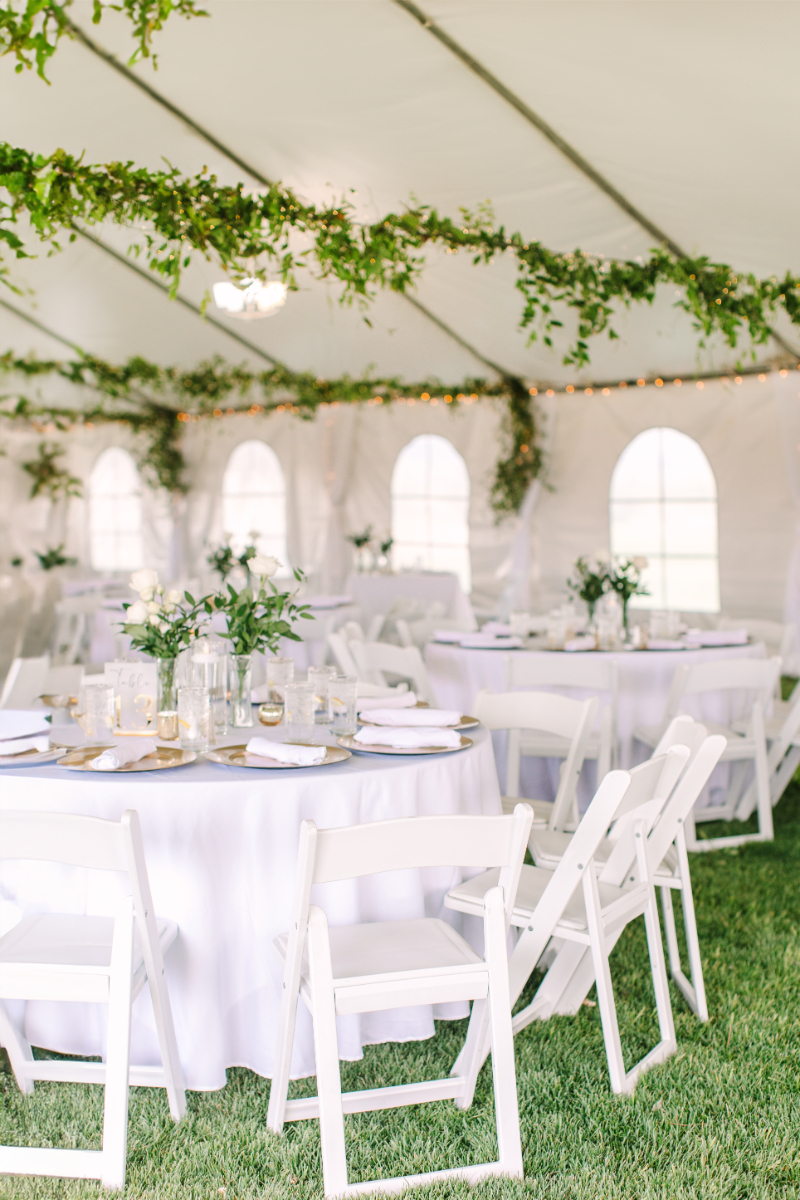
Photo Credit: Maura Jane Photography
How a Planner Helps You Choose the Right Wedding Start Time
A well-built timeline requires more than filling in blank fields on a spreadsheet. It requires experience with how real wedding days actually move — and where they tend to slip.
Here’s what full-service planning brings to the start time decision:
- We work backward from the light. Before any time is set, we identify the sunset time for your date, then build the portrait and ceremony window around it.
- We factor in your specific venue. Access windows, curfews, and turnaround times are built into the framework from the first draft.
- We consult your vendor team. Photographers, caterers, and musicians all have preferences and requirements. We gather those early and reconcile them into one workable timeline.
- We build in real buffer. Not optimistic buffer — practical buffer that accounts for the actual pace of getting a wedding party dressed, transported, and in place.
- We adjust as details change. Timelines evolve as plans develop. We update them proactively so nothing gets left behind.
The goal isn’t a perfect timeline on paper. It’s a timeline that gives you room to be present — with your guests, in the moment, without watching the clock.
To learn more about how we approach planning in New Mexico, our post introduces our own Albuquerque wedding planners for stylish, intentional celebrations and shares how we guide couples through every decision, from start time to send-off.
Photo Credit: Maura Jane Photography
What Time Do Weddings Start? Choosing a Wedding Start Time That Works for Your Day
Start time is one of those decisions that feels small until the day arrives. Then it shapes everything, from the quality of your portraits to how guests feel by dinner and whether the evening has the pace you envisioned. Getting it right requires more than a gut feeling or a default time on the invitation.
The best start times are built from the ground up. Season, light, venue rules, guest comfort, and vendor needs all play a role. When those factors are weighed together with a clear understanding of how the day will actually unfold, the timeline stops being a source of stress and starts being a design tool.
At Verdeaux & Co., we help couples build celebrations where every detail, including the timing, feels considered and intentional. If you’re ready to plan a wedding day that flows exactly the way you’ve imagined, we’d love to help.
Learn more about our planning services, take a look at our portfolio, or contact us to get started!


